
Research Sourcing Review
99% Pure Does Not Mean The Vial Holds 10 Milligrams. Almost Nobody Checks The Second Number.
Purity and quantity are two different measurements. A vial can pass one and say nothing about the other. Here is what the label cannot tell you, and what to ask for before you trust it.
 Visit ORA Labs →
You find a listing. It says 10mg. It says 99% pure. Your brain reads one claim: ten milligrams of almost nothing but the right molecule.
That is not what those two numbers say when you put them side by side.
Purity is a ratio. Of the material in the vial, how much is the target molecule? That is the only question it answers.
Net content is an amount. How many milligrams of that molecule are actually in there? Different question. Different test.
A vial can be 99% pure and still hold less than the label says. Both can be true on the same day, in the same vial. Most listings only print one of them.
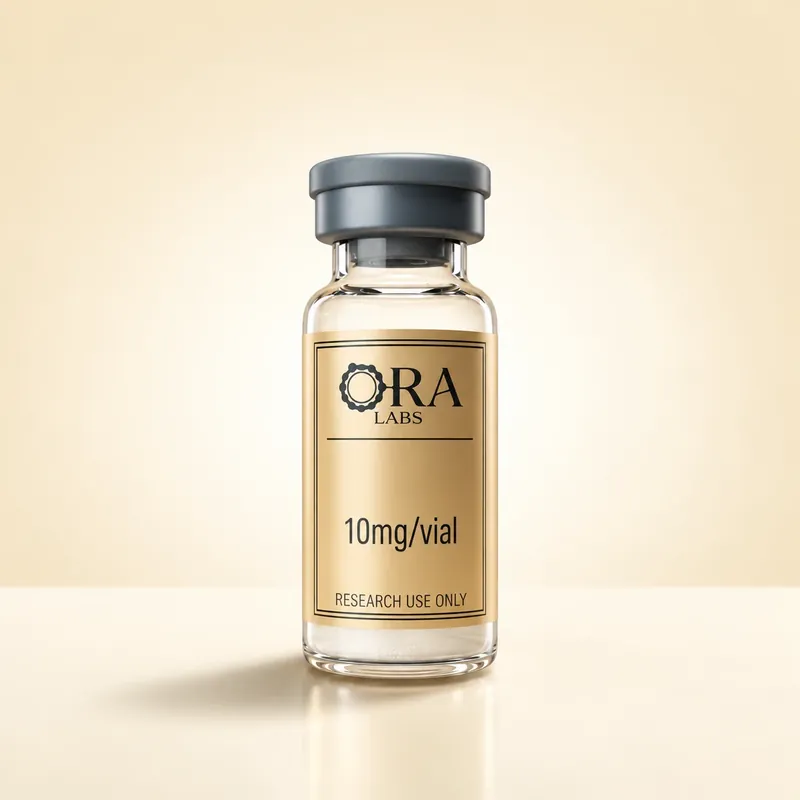
ORA Labs specifies 99%+ purity and verifies it two ways.
HPLC for purity. Mass spectrometry for identity. Independent third-party certificates matched to the lot.
Create Your Free ORA Account →1A percentage cannot tell you an amount
A glass can be 99% orange juice and still be half empty. The 99% describes what is in the glass. It says nothing about how much.
A vial works the same way. Purity describes the contents. It does not count them.
Purity says what it is. Net content says how much. Two numbers. Two tests.
2The rest of the weight is not the compound
Freeze-dried material carries more than the target molecule. Residual salts from synthesis. Water pulled from the air. None of it lowers a purity figure, because purity only looks at the fraction that is the compound.
All of it takes up weight. So the weight in the vial and the compound in the vial are not automatically the same number.
Weight in the vial and target compound in the vial are two different measurements.
3Why the second number goes missing
It costs more. Purity comes off a standard HPLC run. Net content needs an additional quantitative method, and somebody has to order it and print it.
A supplier who never runs it is not hiding a bad number. They simply do not have one. Neither do you.
A missing number is not proof of a problem. It is the absence of proof. That is the problem.
4Start with the two tests that cannot be faked by a label
Before quantity even matters, two things have to be true. The molecule has to be the right one. And it has to be clean.
ORA Labs checks both. Purity is specified at 99%+ and verified by HPLC. Identity is confirmed by mass spectrometry. The results sit on independent third-party Certificates of Analysis, matched to the lot.
Those certificates are published on ORA's Lab Reports page as each lot is tested, and you can request the certificate for your specific lot number by email. That is where you go looking for the second number.
Sample checklist layout, not a real report. Real certificates are in your ORA account.
5The thirty-second check
Open the certificate for the product you are looking at. You do not need to read all of it. Look for four things.
- Purity and identity, both. HPLC alone tells you it is clean. Mass spec tells you it is the right thing.
- A net content line, or an answer when you ask. If nobody can tell you, nobody measured it.
- A lot number that matches your vial. Otherwise you are reading about a different batch.
- A named independent lab. Not "lab tested". A lab, with a name.
Four checks. Under a minute. The fastest way to tell suppliers apart in this category.
| On the paperwork | ORA Labs | What you often see |
|---|---|---|
| Purity | 99%+ spec, verified by HPLC | A percentage on the product page |
| Identity | Confirmed by mass spectrometry | Not mentioned |
| Who tested it | Independent third party | "Lab tested", no lab named |
| Which batch | Certificate matched to the lot | One certificate reused for years |
| Where it is made | Synthesized in the U.S. | Not stated |
6Why the catalogue is behind a sign-in
You will not find ORA's prices on a public page. Products, prices and lab reports are shown to registered customers only, aged 21 or older, for laboratory research use.
Joining is free. Your email and one check box. A password is optional. About a minute, and your orders and lab reports live in one place after that.
Read the certificate first. Then decide.
Create a free account, open the lab reports, and check the lot before you look at anything else.
Create Your Free ORA Account →
Comments
Never thought of purity and amount as two separate tests. Went back through old paperwork from another supplier and there was no amount anywhere on it.
Same. I had been comparing suppliers on the percentage alone.
The orange juice line is the one that made it click. Pure and full are two different claims.
Emailed for the certificate on my lot number and it came back with the matching code on it. That is the whole point of this article.
Signing up took less than a minute. Email and a checkbox, like it says.
Checked three other listings after reading this. None of them named the lab.